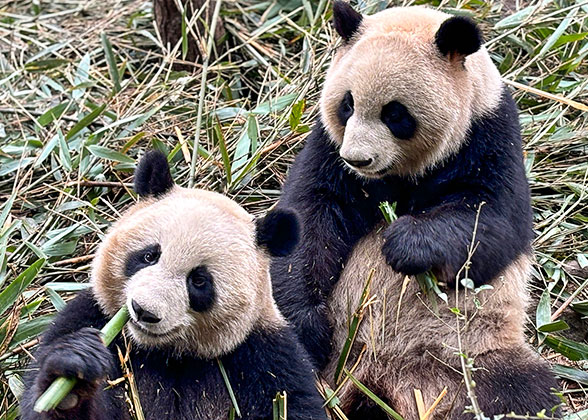
Who would refuse to see those adorable fur balls of pandas while in China? This morning, your guide will take you to the
Panda Hall in Beijing Zoo, to admire those lovely creatures. There will be three halls for adults, adolescents, and cubs respectively. Enjoy your lovely time of watching them sporting here!
After that, we will go to visit the
Summer Palace, originally a birthday gift ordered by a Qing emperor to his mother and now the largest and best-preserved imperial garden left for the world. You’ll appreciate not only the quaint grace of the Long Corridor decorated by classical paintings amid natural beauties, but the imperial solemnity of its Hall of Benevolence and Longevity, the other place for the ruling power late in Qing Dynasty (1644 to 1911 AD) to handle state affairs apart from the Forbidden City.
In the afternoon, we’ll continue our visit to the
Prince Gong’s Mansion, the most grandiose prince mansion ever constructed during Qing Dynasty. As the residence for Prince Gong, an essential figure in shaping the landscape of late Qing era, it was a witness to the rise and fall of the dynasty. One thing that might grab your attention here is those bat patterns seen on the buildings, 9,999 in total, all indicating “lucks”. There is even a Chinese character meaning “luck” proper inscribed by a renowned Qing emperor. Come here to be surrounded by “lucks”! It’s a hidden gem that you should add to your journey.
After that, we continue this trip to the
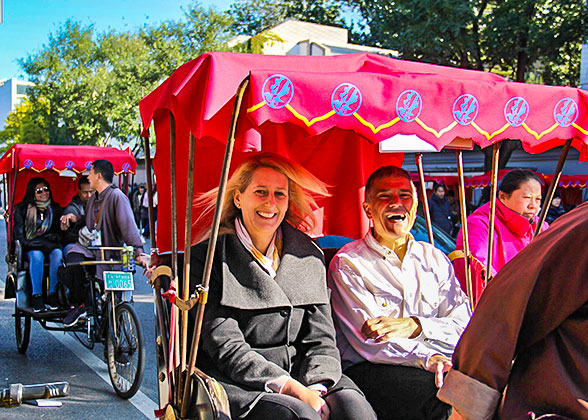
Hutongs, narrow alleys lined with traditional residential houses, or courtyard houses, most of which have a history of several hundred years. You’ll be brought back to the 20th century of China, by a rickshaw ride and a visit to a local family we’ll arrange for you. Finally, you will be driven back to hotel.
► Dinner Suggestion:
At hutong area, you might be interested by an eatery called Lao Shi Jiao Zi Jia Chang Cai (Nanluoguxiang Hutong branch), literally “Mr. Shi’s dumplings and home-cooked dishes”. Nestled within a courtyard house, it has an unexpected past as a filming location. The star dish is of course handmade dumplings, and here you will find a wide variety of options with diverse fillings. Dumplings are part of Chinese culture so your trip in China would be incomplete if you miss them. Their story can trace back to an ancient time at a village, where people suffered for freezing weather during winters. A wise, respected doctor couldn’t stand the scene, so he decided to find a way to relieve his fellows. He combined ingredients like lamb and herbs and wrapped them into crescent-shaped dumplings, before boiling them until well-cooked. Magically, villagers who ate his works found themselves recovering from freezing, and from then on, people started to see dumplings as a cold-fighting meal and associated it with an auspicious meaning. That’s why Chinese make dumplings every New Year, in order to wish for health and happiness. For the connotations, dumplings has become a form of Chinese cultural heritage. The restaurant also serves Beijing-style Noodles with Soybean Paste (Zha Jiang Mian). With English menus and staff who speak basic English, it is a popular spot among international visitors seeking an authentic local dining experience. Average cost per person: CNY 75 / USD 10.
Meals: Western buffet breakfast